Powered By Blogger

jueves, 20 de agosto de 2009

Enuma Elish. Poema babilónico de la Creación


Hablaremos aquí de la edición y traducción de Federico Lara Peinado (Trotta, 2008).


El Enuma Elish (Cuando en lo alto…) toma su nombre de las primeras palabras que componen este antiguo poema.

En él se narra la manera en que los primeros dioses de los babilonios surgieron, y por ende, la creación entera. Pero este, como señala Lara Peinado en la muy completa introducción, no es en todo caso el tema principal del poema, sino la exaltación de Marduk, quien llegaría a ser una de las principales deidades babilónicas. El poema narra entonces cómo es que Marduk alcanzó la supremacía entre los dioses (incluso sobre sus padres y otros de sus divininos ancestros) al enfrentarse en una lucha contra Tiamat, diosa del abismo de las aguas saladas, quien junto con Apsu, el abismo de las aguas dulces, representaba uno de los principios cósmicos en los que se fundaba toda la creación según los babilonios.

La introducción (que abarca casi un tercio de este libro de 116 páginas) nos da los detalles fundamentales que necesitamos saber antes de iniciar la lectura del poema. Las notas al pie son numerosas y aparecen al final del libro para no entorpecer (o al menos eso intentan) la lectura del poema y son de mucha utilidad.

La introducción también nos explica los alcances que esta obra tuvo en su concepción, pues no sólo se trata de un texto de teología o cosmogonía, sino que también implica conocimientos de astrología y astronomía: Tiamat crea, por ejemplo, un ejército de once monstruos más un capitán, lo que tal vez pueda representar el zodíaco; la Tablilla V del poema, que desgraciadamente es una de las más incompletas que nos ha llegado, describe conocimientos de posiciones de constelaciones y planetas que las notas al pie detallan.

Algo que también es curioso de la introducción es una tabla que el traductor incluye en la que compara el relato de la creación del Génesis con el que ofrecen las tablillas del Enuma Elish para encontrarnos con que coinciden en pocos aspectos. Es interesante lo anterior porque los antepasados de los hebreos provenían de los caldeos y debieron haber conocido los elementos de teología y cosmogonía narrados en el Enuma Elish. Por lo tanto, ambos relatos gozan de originalidad, en ningún modo uno es copia del otro.

Hablando de originalidad, los dejo con un fragmento del poema que me pareció también interesante por lo maravilloso de la escena:

La Madre Khubur, que había formado todas las cosas,
acumuló armas irresistibles, dando a luz a dragones gigantes,
de dientes [agu]dos, con mandíbulas despiadadas.
Llenó sus cuerpos de veneno en lugar de sangre;
revistió de terror a los temibles leviatanes,
los coronó con aureolas, hacién[doles] semejantes a los dioses

Tablilla I. Vv. 133-138


Lo que agrega creatividad a la imagen es que aprendemos de las notas de Lara Peinado que esas aureolas de las que habla el texto son conocidas como melammu, un resplandor que acompañaba a los dioses; y por lo visto sí, se podía otorgar y retirar como si de una prenda de vestir se tratara. De hecho, el dios que dio muerte a Apsu tuvo que retirarle su melammu mediante un encantamiento para poder acabar con él.

miércoles, 19 de agosto de 2009

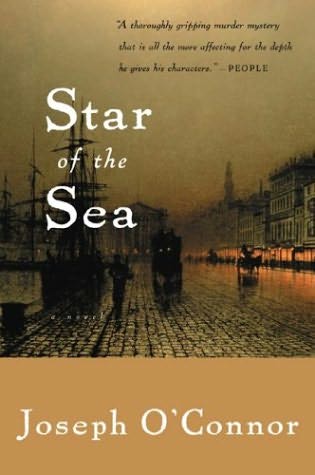
Star of the Sea; Joseph O'Connor


Fiction.

1847. A vessel, the Star of the Sea, departs from an Ireland stormed by the famine. Most of the passengers of the ship are poor farmers and land tenants driven away from their properties. Among them travel Lord Meredith (a nobleman in bankruptcy), his wife, their two children, their maid, a journalist and a man who carries in his past a long list of murders, this last fact unknown to the other passengers, or so it seems…

The destination of the Star of the Sea is America, the Promised Land for most of the passengers. However, each of them, not only the killer, carries a hidden past: one that the author of this novel is going to reveal to us as we read the chapters that describe the 29 days of the voyage.

The double sense in the name and description of each chapter is a resource that the author used in a very original way. The story is intriguing since the beginning. The depth given to the backgroung and motivations of each character are one of the most interesting aspects of this novel.

The atmosphere of the novel is polluted by the famine and corruption of the land which even follows the passengers in their travel on the sea. But the rottenness is also present in some of their own flesh and hearts.

Besides all of this, reading Star of the Sea could propose to us the following question:

Is the act of writing history a creative one?

I think it could be. After all, history and fiction share no few aspects.

lunes, 10 de agosto de 2009

Lucy y el monstruo; Ricardo Bernal


Querido Monstruo:

Ya no te tengo miedo. Mi papi dice que no existes y que no puedes llamar a tus amigos porque ellos tampoco existen. Cuando sea de noche voy a cerrar los ojos antes de apagar la luz del buró y voy a abrazar bien fuerte a mi osito Bonzo para que él tampoco tenga miedo. Si te oigo gruñir en el clóset pensaré que estoy dormida. No quiero que mi papi se despierte y me regañe.

Ya sé que me quieres comer, pero como no existes nunca podrás hacerlo; aunque yo me pase los días pensando que a lo mejor esta noche sí sales del clóset, morado y horrible como en mis pesadillas…

Mañana, cuando juegue con Hugo, le voy a decir que te maté y que te dejé enterrado en el jardín y que nunca más vas a salir de ahí. Él se va a poner tan contento que me va a regalar su yoyo verde y me va a decir dónde escondió mis lagartijas (siempre ha dicho que tú te las comiste, pero eso no puede ser porque mi papi me dijo que no existes y mi papi nunca dice mentiras).

Voy a dejarte esta carta cerca del clóset para que la veas. Voy a pensar en cosas bonitas como en ir al mar, o que es Navidad, o que me saqué un diez en aritmética. ¡Adiós, monstruo!, qué bueno que no existas.

firma: LUCY

PD: No tengo miedo. No tengo miedo. No tengo miedo.

_____________________________


Mi pequeña Lucy:

¿Cómo que no existo? Tu papi no sabe lo que dice. ¿Acaso no me inventaste tú misma el día de tu cumpleaños número siete? ¿Acaso no platicabas conmigo todas las noches y te asustabas con los extraños ruidos de mis tripas? Todas las noches te observé desde el clóset y tú lo sabías…

Aunque nunca me viste conocías de memoria mis ojos, mi lengua y mis colmillos; pues todas, todas las noches me soñabas. Por eso cuando leí tu carta sentí tanta desesperación. Por eso destrocé tus juguetes y me comí de un solo bocado a tu delicioso osito Bonzo.

Lo juro, Lucy, tú ya estabas muerta. Tenías los ojos abiertos y cuando toqué tu barriguita estaba más fría que mi mano. Seguramente te mató el miedo y yo no pude comerte pues no me gusta el sabor de los niños muertos. Lo único que hice fue regresar al clóset y llorar de tristeza hasta quedarme dormido…

¡Pobre Lucy! ¡Pobre Lucy y pobre monstruo solitario!

Ahora tendré que salir de aquí, alejarme de los adultos que cuidan tu pequeño ataúd y dejar esta carta donde puedas encontrarla… Necesito la risa de un niño y necesito el miedo de un niño para seguir vivo.

Por cierto, Lucy, ¿dónde dices que vive tu amigo Hugo?

Atentamente
EL MONSTRUO
_________________

Nota del autor del blog:

El formato en que se presenta aquí este cuento fue realizado comparando los que aparecían en diversos sitios de Internet, casi todos con variantes entre sí.

miércoles, 8 de julio de 2009

Algunos versos del Canto I de Altazor


Contradictorios ritmos quiebran el corazón
En mi cabeza cada cabello piensa otra cosa


Altazor I 487-488


Hombre perro que aúllas a tu propia noche
Delincuente de tu alma
El hombre de mañana se burlará de ti

Ibid. 500-502


Altazor / Temblor de Cielo
Vicente Huidobro
Edición de René de Costa
Cátedra, 13a. edición, 2005

En la Torre de Babel; Wisława Szymborska


—¿Qué hora es? —Sí, soy feliz,
y sólo me falta una campanilla al cuello
que suene encima de ti cuando estés dormido.
—¿Entonces, no has oído la tormenta? El viento ha sacudido
___el muro;
la torre ha bostezado, como un león, con su gran puerta
de goznes chirriantes.
—¿Cómo? ¿Lo has olvidado?
Yo llevaba un sencillo vestido gris
abrochado en el hombro. —E inmediatamente después
el cielo se rompió en mil destellos.
—Cómo iba a entrar
si no estabas solo. —Vi de repente
los colores anteriores a la existencia de la vista.
—Lástima
que no me lo puedas jurar. —Tienes razón,
probablemente fue un sueño.
—¿Por qué mientes,
por qué me llamas con su nombre,
la amas todavía? —Oh, sí, me gustaría
que te quedaras conmigo.
—No siento rencor,
tendría que haberlo imaginado.
—¿Sigues pensando en él? —No, no estoy llorando.
—¿ Y eso es todo? —A nadie como a ti.
—Por lo menos eres sincera. —Puedes estar tranquilo,
me iré de la ciudad. —Puedes estar tranquila,
me iré de esta ciudad.
—Tienes unas manos tan preciosas…
—Es una vieja historia, el filo pasó
sin lesionar el hueso.
—No hay de qué,
querido, no hay de qué. —No sé,
ni quiero saber, qué hora es.


Traducción de Abel A. Murcia

domingo, 5 de julio de 2009

Is spiritual value undone if we can explain that it comes from a "lowly" origin?


Spinoza says: "I will analyze the actions and appetites of men as if it were a question of lines, of planes, and of solids." And elsewhere he remarks that he will consider our passions and their properties with the same eye with which he looks on all other natural things, since the consequences of our affections flow from their nature with the same necessity as it results from the nature of a triangle that its three angles should be equal to two right angles. Similarly M. Taine, in the introduction to his history of English literature, has written: "Whether facts be moral or physical, it makes no matter. They always have their causes. There are causes for ambition, courage, veracity, just as there are for digestion, muscular movement, animal heat. Vice and virtue are products like vitriol and sugar." When we read such proclamations of the intellect bent on showing the existential conditions of absolutely everything, we feel- quite apart from our legitimate impatience at the somewhat ridiculous swagger of the program, in view of what the authors are actually able to perform- menaced and negated in the springs of our innermost life. Such cold-blooded assimilations threaten, we think, to undo our soul's vital secrets, as if the same breath which should succeed in explaining their origin would simultaneously explain away their significance, and make them appear of no more preciousness, either, than the useful groceries of which M. Taine speaks.

Perhaps the commonest expression of this assumption that spiritual value is undone if lowly origin be asserted is seen in those comments which unsentimental people so often pass on their more sentimental acquaintances. Alfred believes in immortality so strongly because his temperament is so emotional. Fanny's extraordinary conscientiousness is merely a matter of over-instigated nerves. William's melancholy about the universe is due to bad digestion- probably his liver is torpid. Eliza's delight in her church is a symptom of her hysterical constitution. Peter would be less troubled about his soul if he would take more exercise in the open air, etc. A more fully developed example of the same kind of reasoning is the fashion, quite common nowadays among certain writers, of criticizing the religious emotions by showing a connection between them and the sexual life. Conversion is a crisis of puberty and adolescence. The macerations of saints, and the devotion of missionaries, are only instances of the parental instinct of self-sacrifice gone astray. For the hysterical nun, starving for natural life, Christ is but an imaginary substitute for a more earthly object of affection. And the like. *

_____

* As with many ideas that float in the air of one's time, this notion shrinks from dogmatic general statement and expresses itself only partially and by innuendo. It seems to me that few conceptions are less instructive than this re-interpretation of religion as perverted sexuality. It reminds one, so crudely is it often employed, of the famous Catholic taunt, that the Reformation may be best understood by remembering that its fons et origo was Luther's wish to marry a nun:- the effects are infinitely wider than the alleged causes, and for the most part opposite in nature. It is true that in the vast collection of religious phenomena, some are undisguisedly amatory- e.g., sex-deities and obscene rites in polytheism, and ecstatic feelings of union with the Saviour in a few Christian mystics. But then why not equally call religion an aberration of the digestive function, and prove one's point by the worship of Bacchus and Ceres, or by the ecstatic feelings of some other saints about the Eucharist? Religious language clothes itself in such poor symbols as our life affords, and the whole organism gives overtones of comment whenever the mind is strongly stirred to expression. Language drawn from eating and drinking is probably as common in religious literature as is language drawn from the sexual life. We 'hunger and thirst' after righteousness; we 'find the Lord a sweet savor;' we 'taste and see that he is good.' 'Spiritual milk for American babes, drawn from the breasts of both testaments,' is a sub-title of the once famous New England Primer, and Christian devotional literature indeed quite floats in milk, thought of from the point of view, not of the mother, but of the greedy babe.

Saint François de Sales, for instance, thus describes the 'orison of quietude': "In this state the soul is like a little child still at the breast, whose mother, to caress him whilst he is still in her arms, makes her milk distill into his mouth without his even moving his lips. So it is here.... Our Lord desires that our will should be satisfied with sucking the milk which His Majesty pours into our mouth, and that we should relish the sweetness without even knowing that it cometh from the Lord." And again: "Consider the little infants, united and joined to the breasts of their nursing mothers, you will see that from time to time they press themselves closer by little starts to which the pleasure of sucking prompts them. Even so, during its orison, the heart united to its God oftentimes makes attempts at closer union by movements during which it presses closer upon the divine sweetness." Chemin de la Perfection, ch. xxxi.; Amour de Dieu, vii. ch. i.

In fact, one might almost as well interpret religion as a perversion of the respiratory function. The Bible is full of the language of respiratory oppression: "Hide not thine ear at my breathing; my groaning is not hid from thee; my heart panteth, my strength faileth me; my bones are hot with my roaring all the night long; as the hart panteth after the water-brooks, so my soul panteth after thee, O my God." God's Breath in Man is the title of the chief work of our best known American mystic (Thomas Lake Harris); and in certain non-Christian countries the foundation of all religious discipline consists in regulation of the inspiration and expiration.

These arguments are as good as much of the reasoning one hears in favor of the sexual theory. But the champions of the latter will then say that their chief argument has no analogue elsewhere. The two main phenomena of religion, namely, melancholy and conversion, they will say, are essentially phenomena of adolescence, and therefore synchronous with the development of sexual life. To which the retort again is easy. Even were the asserted synchrony unrestrictedly true as a fact (which it is not), it is not only the sexual life, but the entire higher mental life which awakens during adolescence. One might then as well set up the thesis that the interest in mechanics, physics, chemistry, logic, philosophy, and sociology, which springs up during adolescent years along with that in poetry and religion, is also a perversion of the sexual instinct:- but that would be too absurd. Moreover, if the argument from synchrony is to decide, what is to be done with the fact that the religious age par excellence would seem to be old age, when the uproar of the sexual life is past?

The plain truth is that to interpret religion one must in the end look at the immediate content of the religious consciousness. The moment one does this, one sees how wholly disconnected it is in the main from the content of the sexual consciousness. Everything about the two things differs, objects, moods, faculties concerned, and acts impelled to. Any general assimilation is simply impossible: what we find most often is complete hostility and contrast. If now the defenders of the sex-theory say that this makes no difference to their thesis; that without the chemical contributions which the sex-organs make to the blood, the brain would not be nourished so as to carry on religious activities, this final proposition may be true or not true; but at any rate it has become profoundly uninstructive: we can deduce no consequences from it which help us to interpret religion's meaning or value. In this sense the religious life depends just as much upon the spleen, the pancreas, and the kidneys as on the sexual apparatus, and the whole theory has lost its point in evaporating into a vague, general assertion of the dependence, somehow, of the mind upon the body.
_____

We are surely all familiar in a general way with this method of discrediting states of mind for which we have an antipathy. We all use it to some degree in criticizing persons whose states of mind we regard as overstrained. But when other people criticize our own more exalted soul-flights by calling them 'nothing but' expressions of our organic disposition, we feel outraged and hurt, for we know that, whatever be our organism's peculiarities, our mental states have their substantive value as revelations of the living truth; and we wish that all this medical materialism could be made to hold its tongue.

The Varieties of Religious Experience by William James
Lecture 1. Religion and Neurology
Pages 12-16
2002 Modern Library Paperback Edition

Algunos Versos y oraciones del caminante aparecidos en Antología rota, de León Felipe


II

Deshaced ese verso.
Quitadle los caireles de la rima,
el metro, la cadencia
y hasta la idea misma.
Aventad las palabras,
y si después queda algo todavía,
eso
será la poesía.


III

Poesía,
tristeza honda y ambición del alma,
¡cuándo te darás a todos... a todos,
al príncipe y al paria,
a todos...
sin ritmo y sin palabras!


V

Poeta,
ni de tu corazón,
ni de tu pensamiento,
ni del horno divino de Vulcano
han salido tus alas.
Entre todos los hombres las labraron
y entre todos los hombres en los huesos
de tus costillas las hincaron.
La mano más humilde
te ha clavado
un ensueño...
una pluma de amor en el costado.


León Felipe
Antología rota
Losada
Tercera reimpresión

Traducir poesía...


Traducir poesía supone asumir previamente un cierto fracaso...

Aparecido en la Nota de los traductores de Edgar Allan Poe. Poesía Completa. poesía Hiperión, 2006. Traducción de María Condor y Gustavo Falaquera.

Y sí, como dijo alguien en Wikisource, esta edición es un ejemplo de "traducción acertada pero de lectura aburrida".

Lo que regía la vida de los aztecas...


Religión y destino regían su vida, como moral y libertad presiden la nuestra. Mientras nosotros vivimos bajo el signo de la libertad y todo —aun la fatalidad griega y la Gracia de los teólogos— es elección y lucha, para los aztecas el problema se reducía a investigar la no siempre clara voluntad de los dioses. De ahí la importancia de la prácticas adivinatorias. Los únicos libres eran los dioses. Ellos podían escoger y, por lo tanto, en un sentido profundo, pecar. La religión azteca está llena de grandes dioses pecadores —Quetzatcóatl, como ejemplo máximo—, dioses que desfallecen y pueden abandonar a sus creyentes, del mismo modo que los cristianos reniegan a veces de su Dios. La Conquista de México sería inexplicable sin la traición de los dioses que reniegan de su pueblo.

Octavio Paz
"Todos Santos, Día de Muertos"

sábado, 4 de julio de 2009

Un poète...; Boris Vian


UN POÈTE…

Un poète
C’est un être unique
À des tas d’exemplaires
Qui ne pense qu’en vers
Et n’écrit qu’en musique
Sur des sujets divers
Des rouges et des verts
Mais toujours magnifiques.


UN POETA…

Un poeta
Es un ser único
En montones de ejemplares
Que no piensa más que en verso
Y no escribe más que en música
Sobre motivos diversos
Unos rojos otros verdes
Pero magníficos siempre.

Traducción de Juan Antonio Tello

jueves, 25 de junio de 2009

Prehistoria; José Emilio Pacheco

1

En las paredes de esta cueva
pinto el venado
para adueñarme de su carne,
para ser él,
para que su fuerza y su ligereza sean mías
y me vuelva el primero
entre los cazadores de la tribu.

En este santuario
divinizo las fuerzas que no comprendo.
Invento a Dios,
a semejanza del Gran Padre que anhelo ser,
con poder absoluto sobre la tribu.

En este ladrillo
trazo las letras iniciales,
el alfabeto con que me apropio del mundo al simbolizarlo.
La T es la torre y desde allí gobierno y vigilo.
La M es el mar desconocido y temible.

Gracias a ti, alfabeto hecho por mi mano,
habrá un solo Dios: el mío.
Y no tolerará otras deidades.
Una sola verdad: la mía.
Y quien se oponga a ella recibirá su castigo.

Habrá jerarquías, memoria, ley:
mi ley: la ley del más fuerte
para que dure siempre mi poder sobre el mundo.


2

Al contemplar por vez primera la noche
me pregunté: ¿será eterna?
Quise indagar la razón del sol, la inconstante
movilidad de la luna,
la misteriosa armada de estrellas
que navegan sin desplomarse.

Enseguida pensé que Dios es dos:
la luna y el sol, la tierra y el mar, el aire y el fuego.
O es dos en uno:
la lluvia/la planta, el relámpago/el trueno.

¿De dónde viene la lumbre del cielo?
¿La produce el estruendo? ¿O es la llama
la que resuena al desgarrar el espacio?
(como la grieta al muro antes de caer
por los espasmos del planeta siempre en trance de hacerse).

¿Dios es el bien porque regala la lluvia?
¿Dios es el mal por ser la piedra que mata?
¿Dios es el agua que cuando falta aniquila
y cuando crece nos arrastra y ahoga?

A la parte de mí que me da miedo
la llamaré Demonio.
¿O es el doble de Dios, su inmensa sombra?
Porque sin el dolor y sin el mal
no existirían el bien ni el placer,
del mismo modo que para la luz
son necesarias las tinieblas.

Nunca jamás encontraré la respuesta.
No tengo tiempo. Me perdí en el tiempo.
Se acabó el que me dieron.


3

Ustedes, los que escudriñen nuestra basura
y desentierren puntas
de pedernal, collares de barro
o lajas afiladas para crear muerte;
figuras de mujeres en que intentamos
celebrar el misterio del placer
y la fertilidad que nos permite seguir aquí contra todo
-enigma absoluto
para nuestro cerebro si apenas está urdiendo el lenguaje-
lo llamarán mamut.
Pero nosotros en cambio
jamás decimos su nombre:
tan venerado es por la horda que somos.

El lobo nos enseñó a cazar en manada.
Nos dividimos el trabajo, aprendimos:
la carne se come, la sangre fresca se bebe,
como fermento de uva.
Con su piel nos cubrimos.
Sus filosos colmillos se hacen lanzas
para triunfar en la guerra.
Con los huesos forjamos
insignias que señalan nuestro alto rango.

Así pues, hemos vencido al coloso.
Escuchen cómo suena nuestro grito de triunfo.

Qué lástima.
Ya se acabaron los gigantes.
Nunca habrá otro mamut sobre la tierra.


4

Mujer, no eres como yo
pero me haces falta.

Sin ti sería una cabeza sin tronco
o un tronco sin cabeza. No un árbol
sino una piedra rodante.

Y como representas la mitad que no tengo
y te envidio el poder de construir la vida en tu cuerpo,
diré: nació de mí, fue un desprendimiento:
debe quedar atada por un cordón umbilical invisible.

Tu fuerza me da miedo.
Debo someterte
como a las fieras tan temidas de ayer.
Hoy, gracias a mi crueldad y a mi astucia,
labran los campos, me transportan, me cuidan,
me dan su leche y hasta su piel y su carne.

Si no aceptas el yugo,
si queda aún en la ceniza el rescoldo
de aquellos tiempos en que eras reina de todo,
voy a situarte entre los demonios que he creado
para definir como El Mal cuanto se interponga
en mi camino hacia el poder absoluto.

Eva o Lilit:
escoge pues entre la tarde y la noche.

Eva es la tarde y el cuidado del fuego.
Reposo en ella, multiplica mi especie
y la defiende contra la gran tormenta del mundo.

Lilit, en cambio, es el nocturno placer,
el imán, el abismo, la hoguera en que ardo.
Y por tanto la culpo de mi deseo.
Le doy la piedra, la ignominia, el cadalso.

Eva o Lilit: no lamentes mi triunfo.
Al vencerte me he derrotado.


José Emilio Pacheco
El silencio de la luna [POEMAS 1985-1993]
Era / Casa de Poesía Silva, 1996
Páginas 17-21

miércoles, 24 de junio de 2009

Jarchas de varios autores (tomadas de una compilación de José Prats Sariol)


Yehudá Ha-Leví

EN BOCA DE LA AMADA

No me toques, oh amigo mío,
quedaos quieto ahí.
La majestad es toda indulgencia,
baste el permiso.

Abraham Ben Ezra

EN BOCA DEL ALMA DEL POETA

Guarda ¿qué haré yo?
¿cómo viviré yo?
Espero a este amado.
Por él moriré yo.

Todros Abulafia

EN BOCA DE UNA CRISTIANA

¡Oh Aurora buena!
Cuídame de donde vienes;
ya sé que amas a otra*,
a mí no me quieres.

Anónimo

EN BOCA DEL POETA

¡Oh moreno, oh niñita de mis ojos!
¿Quién podrá tolerar la ausencia,
amigo mío?


Tomado de Poesía de amor española hasta el siglo XV
Volumen I
Compilación y notas de José Prats Sariol
LunArena Editorial, 2006
Págs. 15-18

Nota del autor del blog:
*En la edición de Prats Sariol aparece otro en lugar de otra. Hemos optado por esta última debido a que http://www.jarchas.net/jarcha17.htm así lo sugiere.

Knowlt Hoheimer & Lydia Puckett in Spoon River Anthology


Knowlt Hoheimer

I was the first fruits of the battle of Missionary Ridge.
When I felt the bullet enter my heart
I wished I had staid at home and gone to jail
For stealing the hogs of Curl Trenary,
Instead of running away and joining the army.
Rather a thousand times the country jail
Than to lie under this marble figure with wings,
And this granite pedestal
Bearing the words, "Pro Patria."
What do they mean, anyway?


Lydia Puckett

Knowlt Hoheimer ran away to the war
The day before Curl Trenary
Swore out a warrant through Justice Arnett
For stealing hogs.
But that’s not the reason he turned a soldier.
He caught me running with Lucius Atherton.
We quarreled and I told him never again
To cross my path.
Then he stole the hogs and went to the war—
Back of every soldier is a woman.


Edgar Lee Masters

martes, 23 de junio de 2009

El ensayista del siglo XX tiende a describir y enunciar problemas, no a resolverlos...


El ensayista del siglo XX tiende a describir y enunciar problemas, no a resolverlos. La solución se deja a los científicos, los sociólogos, economistas y políticos. En el siglo XX, muchos ensayistas han tratado de ser cronistas de sus sociedades más que redentores. En contraste, los ensayistas hispanoamericanos en el siglo XIX estuvieron más seguros de sí mismos al proponer programas de reforma. Sarmiento, Echeverría, Alberdi, Bello, Hostos, Lastarria, Montalvo, Martí y otros tuvieron que cumplir papeles dobles como líderes políticos y como ensayistas. González Prada (1844-1918) y Vasconcelos (1882-1959) llenaron el perfil de esos buscadores decimonónicos de la utopía mejor que la de sus contemporáneos en el siglo XX. No obstante, los ensayistas del siglo XX actúan también como estadistas, políticos, conferencistas, educadores, académicos, editores, directores de publicaciones y periodistas. Quieren producir un impacto en la sociedad, pero eluden hacer los diseños de las utopías en la era de los especialistas y los tecnócratas.


El ensayo hispanoamericano del siglo XX
John Skirius (compilador)
FCE. Tierra firme, 1981
Este centauro de los Géneros. Pág. 13

miércoles, 17 de junio de 2009

La fábula del pelotudo


En una ciudad del interior, un grupo de personas se divertían con el pelotudo del pueblo, un pobre infeliz de poca inteligencia, que vivía haciendo pequeños mandados y recibiendo limosnas.

Diariamente, algunos hombres llamaban al pelotudo al bar donde se reunían y le ofrecían escoger entre dos monedas: una de tamaño grande de 50 centavos y otra de menor tamaño, pero de 1 peso. Él siempre agarraba la más grande y menos valiosa, lo que era motivo de risas para todos.

Un día, alguien que observaba al grupo divertirse con el inocente hombre, lo llamó aparte y le preguntó si todavía no había percibido que la moneda de mayor tamaño valía menos y éste le respondió:

- Lo sé, no soy tan pelotudo..., vale la mitad, pero el día que escoja la otra, el jueguito se acaba y me quedo sin monedas.

Moraleja 1: El que aparenta ser el pelotudo más grande, no lo es.

Moraleja 2: Siempre hay algún pelotudo dispuesto a pagar por alguna pelotudez.


Tomado de:


Si alguien conoce el nombre del autor de la fábula, favor de indicarlo.

martes, 16 de junio de 2009

Reacción de Paul Celan al enterarse de que los nazis también escribían poemas


[Celan]… en 1960 le escribía a Nelly Sachs: «¿Qué puedo decirle? Diariamente la humillación penetra en mi casa, diariamente, créame. ¿Qué no nos queda aún por pasar a los judíos? Y nosotros tenemos un niño, Nelly Sachs, ¡un hijo!». Celan aprovechaba para preguntarle a su amiga sobre la condición humana de los nazis: «Sabe, algunos de ellos escriben poemas. Esos hombres ¡escriben poemas! ¡Qué no escribirían, los falsarios!». La sola publicidad de que algunos de los nazis recientemente capturados escribían poesía le resultaba inconcebible a Celan: la poesía debía tener una base moral.


Paul Celan. Obras Completas
Editorial Trotta, 2007
Prólogo de Carlos Ortega, pág. 26

Esta noche es irremediable...; Osip Mandelstam


Esta noche es irremediable.
Pero en vuestra casa aún hay luz.
A las puertas de Jerusalem
salió un sol negro.

El sol amarillo es más terrible,
–duerme, mi niño, duerme–,
en un luminoso templo los judíos
dieron sepultura a mi madre.

Sin la bendición divina,
excluidos del sacerdocio,
en un luminoso templo los judíos
oficiaron una misa por la difunta.

y sobre mi madre resonaron
las voces de los hijos de Israel.
Me desperté en la cuna,
alumbrado por un sol negro.

domingo, 14 de junio de 2009

The role of existential judgments and propositions of value when considering the content of the Bible according to William James


In recent books of logic, distinction is made between two orders of inquiry concerning anything. First, what is the nature of it? how did it come about? what is its constitution, origin and history? And second, What is its importance, meaning, or significance, now that it is once here? The answer to the one question is given in an existential judgment or proposition. The answer to the other is a proposition of value, what the Germans call a Werthurtheil, or what we may, if we like, denominate a spiritual judgment. Neither judgment can be deduced immediately from the other. They proceed from diverse intellectual preoccupations, and the mind combines them only by making them first separately, and then adding them together.

In the matter of religions it is particularly easy to distinguish the two orders of question. Every religious phenomenon has its history and its derivation from natural antecedents. What nowadays is called the higher criticism of the Bible is only a study of the Bible from this existential point of view, neglected too much by the earlier church. Under just what biographic conditions did the sacred writers bring forth their various contributions to the holy volume? And what had they exactly in their several individual minds, when they delivered their utterance? These are manifestly questions of historical fact, and one does not see how the answer to them can decide offhand the still further question: of what else should such a volume, with its manner of coming into existence so defined, be to us as a guide to life and revelations? To answer this other question we must have already in our mind some sort of a general theory as to what the peculiarities in a thing should be which give it value for purposes of revelation; and this theory itself would be what I just called a spiritual judgment. Combining it with our existential judgment, we might indeed deduce another spiritual judgment as to the Bible’s worth. Thus if our theory of revelation-value were to affirm that any book, to possess it, must have been composed automatically or not by the free caprice of the writer, or that it must exhibit no scientific and history errors and express no local or personal passions, the Bible would probably fare ill at our hands. But if, on the other hand, our theory should allow that a book may well be a revelation in spite of errors and passions and deliberate human composition, if only it be a true record of the inner experiences of great-souled persons wrestling with the crises of their fate, then the verdict would be much more favorable. You see that the existential facts by themselves are insufficient for determining the value; and the best adepts of the higher criticism accordingly never confound the existential with the spiritual problem. With the same conclusions of fact before them, some take one view, and some other, of the Bible’s value as a revelation, according as their spiritual judgment as the foundation of value differs.

The Varieties of Religious Experience by William James
Lecture 1. Religion and Neurology
Pages 6-8
2002 Modern Library Paperback Edition

Huye de lo grandioso...


Huye de lo grandioso si no quieres morir aplastado por
__un merengue.


-Vicente Huidobro


Según Introducción de Altazor/Temblor de cielo
Edición de René Acosta
Pág. 17
Cátedra, 13a. edición

viernes, 12 de junio de 2009

Nightmare in Yellow; Fredric Brown


He awoke when the alarm clock rang, but lay in bed a while after he’d shut it off, going a final time over the plans he’d made for embezzlement that day and for murder that evening.

Every little detail had been worked out, but this was the final check. Tonight at forty-six minutes after eight he’d be free, in every way. He’d picked that moment because this was his fortieth birthday and that was the exact time of day, of the evening rather, when he had been born. His mother had been a bug on astrology, which was why the moment of this birth had been impressed on him so exactly. He wasn’t superstitious himself, but it had struck his sense of humour to have his new life begin at forty, to the minute.

Time was running out on him, in any case. As a lawyer who specialized in handling estates, a lot of money passed through his hands – and some of it had passed into them. A year ago he’d “borrowed” five thousand dollars to put into something that looked like a sure-fire way to double or triple the money, but he’d lost it instead. Then he “borrowed” more to gamble with, in one way or another, to try to recoup the first loss. Now he was behind to the tune of over thirty thousand; the shortage couldn’t be hidden more than another few months and there wasn’t a hope that he could replace the missing money by that time. So he had been raising all the cash he could without arousing suspicion, by carefully liquidating assets, and by this afternoon he’d have running away money to the tune of well over a hundred thousand dollars, enough to last him the rest of his life.

And they’d never catch him. He’d planned every detail of his trip, his destination, his new identity, and it was fool proof. He’d been working on it for months.

His decision to kill his wife had been relatively an after thought. The motive was simple: he hated her. But it was only after he’d come to the decision that he’d never go to jail, that he’d kill himself if he was ever apprehended, that it came to him that – since he’d die anyway if caught – he had nothing to lose in leaving a dead wife behind him instead of a living one.

He’d hardly been able to keep from laughing at the appropriateness of the birthday present she’d given him (yesterday, a day ahead of time); it had been a new suitcase. She’d also talked him into celebrating his birthday by letting her meet him downtown for dinner at seven. Little did she guess how the celebration would go after that. He planned to have her home by eight forty-six and satisfy his sense of the fitness of things by making himself a widower at that exact moment. There was a practical advantage, too, in leaving her dead. If he left her alive, but asleep, she’d guess what had happened and call the police when she found him gone in the morning. If he left her dead, her body would not be found that soon, possibly not for two or three days, and he’d have a much better start.

Things went smoothly at his office; by the time he went to meet his wife everything was ready. But she dawdled over drinks and dinner and he began to worry whether he could get her home by eight forty-six. It was ridiculous, he knew, but it had become important that his moment of freedom should come then and not a minute earlier or a minute later. He watched his watch.

He would have missed it by half a minute if he’d waited ‘till they were inside the house. But the dark of the porch of their house was perfectly safe, as safe as inside. He swung the crowbar viciously once, as she stood at the front door, waiting for him to open it. He caught her before she fell and managed to hold her upright with one arm while he got the door open and then got it closed from the inside.

Then he flicked the switch and yellow light leaped to fill the room, and, before they could see that his wife was dead and that he was holding her up, all the assembled birthday party guests shouted “Surprise!”